
- Dry-to-touch does not mean fully cured.
- Recoat time depends on paint formulation.
- Latex paint generally dries faster than oil-based paint.
- High humidity can delay paint drying.
- Thick paint layers may take longer to dry.
- Fans improve airflow around painted surfaces.
- Air conditioning helps manage indoor humidity.
- Rain can damage freshly applied exterior paint.
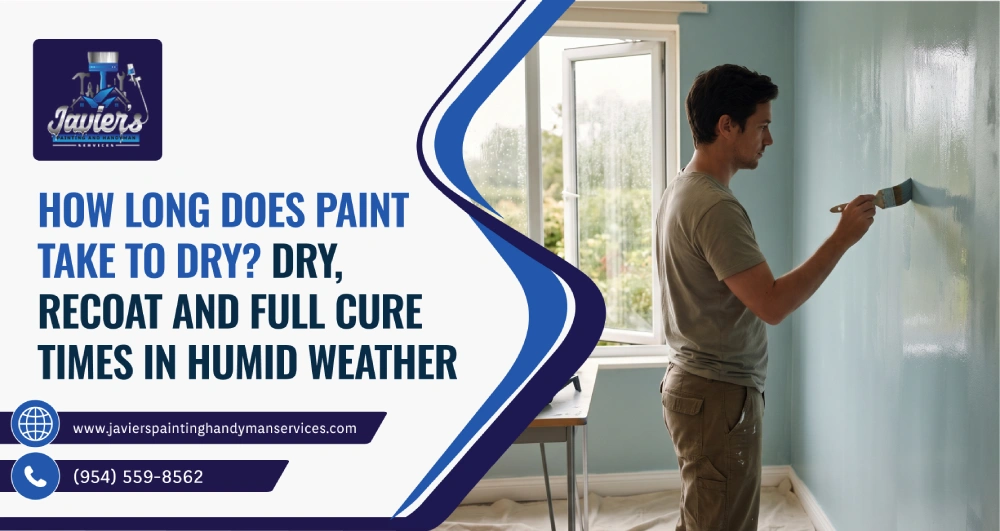
How long paint takes to dry depends on paint type, room temperature, humidity, airflow, and also the painting surface. Although most interior paints would dry within a few hours, it does not guarantee that you can put another coat on.
In South Florida, painting in high humidity can slow down the paint drying process. Although your room might feel warm, the moisture in the air will prevent the paint from drying, and you may experience paint peeling due to moisture.
Most water-based latex paints usually become dry to the touch within a few hours; the oil-based paint typically takes longer. However, the exact paint drying time will depend on the product type and the room temperature and humidity. Also remember that the drying and recoat time will always vary depending on the formula. Therefore, always read carefully the manufacturer’s instructions.
Any painting process has three basic stages- dry to touch, recoat time, and full cure time. We will take you through this guide to help you understand how humid weather can influence all three stages.
What is the Difference Between Dry Time, Recoat Time, and Cure Time?
Dry time, recoat time and cure time are three separate stages, and mixing them up is a common cause of smudges, lap marks and peeling.
Dry to touch: the surface no longer feels wet or tacky, but the paint underneath is still soft.
Recoat time: the earliest the label says you can apply a second coat without lifting or streakingthe first.
Cure time: the paint has fully hardened and can handle scrubbing, furniture and wall hangings. This takes days to weeks, not hours.
A wall can feel dry within an hour and still mark if you push furniture against it. Wait for the full cure before you scrub or hang anything heavy.”
Here’s a quick breakdown for you:
| Paint Stage | What it Means | General Guidance |
| Dry to Touch | When lightly touched it does not feel wet anymore. | Latex paints may take a couple of hours, for oil-based paints its longer |
| Recoat Time | You can apply the next coat | Check product label to follow the minimum recoat time |
| Full Cure | The paint is now hard, and is fully set | Depending on the paint type, it might take days or weeks. |
Be careful as the dry to touch stage does not guarantee that you can move your furniture back in, or you may clean it. The fresh paint can still be wet in places even with a dry surface.
How Long Should You Wait Between Coats in Florida Humidity?
Painting in humid Florida is a different ball game than it is in the cooler parts. You might even think that you would finish two coats back to back in one day, but due to the humid weather the first coat might take longer to dry.
There are a couple of things that you should keep in mind before you apply that second coat:
- Check and confirm if the first coat has reached the recommended recoat stage.
- Look for spots that still feel wet and soft.
- Do not add a second coat on thickly coated sections.
- Maintain an ideal paint drying temperature
- Keep the AC on or use a dehumidifier as per your requirement.
Follow the recoat time on the can. If the label says 4 hours, that is the minimum, and humid rooms often need longer. Don’t wait for the paint to fully cure before the second coat, because cure takes days or weeks. Wait until the first coat feels dry and firm, not soft or tacky. An extra hour or two is always safer than recoating early.
Does Latex Paint Dry Faster Than Oil Based Paint?
Oil-based (alkyd) paint takes longer: roughly 6–8 hours to dry to the touch and about 24 hours before a second coat. It’s less common on interior walls today and is mostly used on trim, doors and cabinets where a hard finish matters
Oil based paints however, take a little longer due to its unique formulation. It usually is applied on basically exterior surfaces, trims, doors, kitchen cabinets, and it is a practical choice for the bathroom and the kitchen area, where the application of this paint would make the cleaning a lot easier
Can You Paint When It Is Hot, Humid or About to Rain?
Yes, as long as the weather cooperates. The heat can cause the paint to dry too quickly causing brush marks and poor adhesion. A very common cause of this is when you are painting an external wall in direct sunlight. Try to paint in the shade around your house. Always check the label to ensure you are within the correct temperature range.
High humidity will slow the drying time, as discussed above. It is generally not a good idea to paint externally on a very humid day. Rain is obviously a risk. If fresh paint gets caught in a heavy downpour it can cause streaking, patchiness or washing off. Storms can often happen in Florida in the afternoons so always check the weather forecast for the whole day.
A safer option is to try to get started early and finish each section of wall before the weather changes. Ensure surfaces are completely dry. If there was rain the previous night make sure the siding/stucco has dried out. Waiting a day costs little. Repainting a streaked or washed-off wall costs far more.
Does a Fan or Air Conditioner Help Paint Dry Faster?
Both the fan and air conditioners will help paint dry faster. The moving drier air will help draw the moisture off the wet paint quicker.
Using a fan will help create a constant flow of air over the wall. While using a fan do not point it directly at the wet paint. You want to create an even flow of air around the room. If you create a strong flow of air directly over the surface it can cause uneven drying and will throw dust onto your paint.
The Air Conditioner will lower the humidity in the room. This is great in Florida. Using the Air Conditioner with a constant temperature that you are comfortable with will give a more controlled environment for your paint. Whereas leaving a window open on a humid day can cause unpredictable results. In rooms that tend to be quite damp a dehumidifier can help.
You will not be able to ignore the recoat times on the label. However, using these tools will help create the best conditions for your paint. Think of them as ways to prevent any delays. Ensure you keep the airflow light and constant.
How Does Humidity in Florida Affect Paint Drying Time?
Florida’s humidity level is high, which is why the air feels damp even on a sunny day. You might apply a fresh coat of paint expecting it to get dry after a couple of hours, but you still find the surface to be sticky. A paint dries when the water or a solvent evaporates and gets absorbed by the surrounding air. But, if the air is humid it already contains moisture, the process will slow down. During the summer season especially Florida gets too humid.
On a humid day, a coat might take longer than usual to dry out. The surface might look dry but the layer underneath might still be too soft. Applying another coat of paint might trap that moisture, and might even lead to streaks or even a tacky finish.
However, before opening that can of paint, you should check the paint label. It would mention the maximum amount of humidity level for application. However, some rooms would be more humid than others such as the rooms with poor ventilation or bathrooms and kitchens. Humidity can affect the drying process in the following ways:
- Longer drying time
- Sticky surfaces
- Delayed recoating
- Increased risk of bubbling and peeling
Use a hygrometer to measure humidity in a room before you apply the first coat of paint. For the interior, you can keep the AC running or use a dehumidifier or a fan. Exterior projects are different; if it has rained or the humidity level is high, wait for sometime. Check the surfaces prior to applying a coat. Choose later mornings and early afternoons when it is not raining.
Interior Paint Drying Time vs. Exterior Paint Drying Time
Both interior and exterior paint get affected by humidity, but they do not dry at the same speed. Inside a home, drying would depend on the temperature, humidity, and airflow. Outdoors heat can quickly dry out a surface but if there is high humidity, it would slow down the process. Although wind can help with drying, strong wind and harsh sunlight might also lead to uneven drying.
Here’s a quick comparison:
| Comparison Points | Interior Paint | Exterior Paint |
| Drying factors | Indoor humidity, ventilation, temperature. | Humidity, sunlight, temperature, wind and rain. |
| Common challenges | Poor airflow and moisture buildup | Rain, dew, and changing weather. |
| What to check? | Room ventilation and paint label. | Weather forecast and surface dryness |
Airflow, ventilation, paint and room/surface type are some of the factors that determine paint’s dry, recoat and full cure times. Read the label, measure humidity using the right instrument, and while painting outdoors avoid direct sunlight.
Humidity makes timing harder in South Florida. If you’d rather not guess, Javier’s Painting & Handyman Services can plan the coats around the weather for you.
If you are planning an exterior project, read our guide to the best time of year to paint. It explains what homeowners should consider before choosing a painting period.
For larger indoor projects, our residential painting services can help with surface preparation, paint selection, and application. If you are planning to repaint your home’s outside, learn more about our exterior painting services. Get a free estimate today!
Frequently Asked Questions
How long to wait between coats of paint?
Check the recoat time mentioned on the paint can. Remember that latex and oil-based paints might have different instructions. The recoat time also gets controlled by high humidity, low temperature, and poor ventilation.
Does the paint dry faster with a fan?
Yes, a fan can improve airflow and help in removing moisture from a room. Follow the drying instructions mentioned by the manufacturer. Remember, do not point strong airflow at the wet paint.
How long does paint take to dry in high humidity?
In high humidity, expect each stage to take noticeably longer, often a few extra hours between coats. Run the AC or a dehumidifier, keep light airflow moving, and check that the surface is dry and firm before recoating. Always follow the label.
How long before I can hang pictures or move furniture back?
Wait until the paint is dry and firm. Light items can go back after a few days, but avoid scrubbing or heavy contact until it has healed, which can take up to 30 days for latex.