

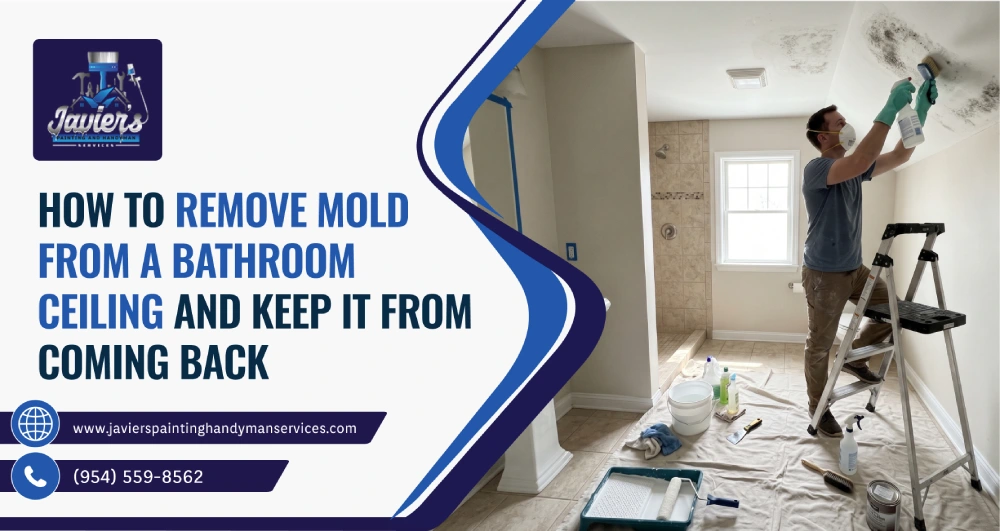
- Identify the moisture source before cleaning the mold.
- Use suitable cleaners for light surface mold.
- Never paint over existing mold.
- Dry the ceiling before applying primer or paint.
- Exhaust fans help remove damp bathroom air.
- Fix leaks and damaged caulk promptly.
- Use mildew-resistant paint on suitable surfaces.
- Call professionals for damaged or sagging ceilings.
Mold can be more than just an eyesore. Mold can leave unsightly black spots and can cause damage to painted areas. To find out how to get rid of mold on your bathroom ceiling you should first assess the area and find out why the moisture is accumulating.
South Florida has hot temperatures, high humidity and regular showers meaning that keeping your bathrooms dry can be quite challenging. A weak exhaust fan, poor ventilation, leaky pipes or damaged caulk can all lead to moisture build-up and cause mold to grow.
To help prevent it from coming back you will need to remove the source of the moisture, properly prepare the ceiling and apply the correct mildew resistant paint if you are painting. Here is how to do it:
What Kills Mold on a Bathroom Ceiling?
Using a suitable cleaner can clean off light surface mold from some painted ceilings. Using a mild detergent or a specific mold and mildew remover will be suitable for your home.
Some homeowners will use vinegar or hydrogen peroxide. However, this can be unsuitable for some surfaces. Always check the label and test on a small, inconspicuous area. Do not get the ceiling too wet as this can cause damage to the dry wall and paint.
Many homeowners skip bleach, which can discolor painted surfaces and doesn’t reach moisture soaked into drywall. A mild detergent solution or a product labeled for mold and mildew is a safer first choice. Never mix bleach with vinegar, ammonia or any other cleaner, because the fumes are dangerous.
Cleaning will only remove the visible mold. If there is still a damp problem with your ceiling (due to a leak or poor ventilation), mold can grow again. You need to fix the damp problem before repainting.
How to Remove Mold From a Bathroom Ceiling Step by Step
If the ceiling is hard and the area affected is small with no sign of any leaking or water damage then you may be able to clean a small area of surface mold. If the area is large or the ceiling is soft, sagging or crumbling then do not try to clean this yourself.
Before beginning, ensure you have taken the following precautions. Wear gloves, eye protection and a correctly fitting respirator mask. Keep children and pets out of the area. Open windows if possible and turn on the exhaust fan if it is externally vented.
Follow these steps:
- Check the ceiling. Look for peeling paint, staining, cracking, softness and signs of leaking. Do not touch any damaged areas.
- Protect the room. Remove items from the bathroom and cover items around the area to protect from dripping.
- Use a suitable cleaning product. Ensure you use a product that is suitable to use on the ceiling surface and follow the guidance on the label.
- Gently clean the area. Do not dry brush, sand or vigorously scrub. This can cause mold spores to spread. Do not soak the surface.
- Wipe/rinse as instructed. Follow the guidance on the product.
- Dry the surface. Do not prime or paint until the surface is completely dry and the source of the moisture has been resolved.
If mold appears quickly after cleaning do not continue to clean or scrub. Find out why the ceiling is remaining damp.
Can You Paint Over Mold on a Bathroom Ceiling?
No. Painting over mold does not remove it or fix the moisture problem. The growth may continue underneath the new coating, and stains or peeling may appear again.
First, remove surface mold using a suitable cleaning method. Make sure the ceiling is completely dry and check for leaks, damaged drywall, and poor ventilation. If the ceiling material is soft or damaged, it may need repair or replacement before painting.
Once the surface is clean, dry, and in good condition, apply a suitable stain-blocking primer if the product instructions recommend it. Follow with mildew-resistant paint made for bathroom ceilings or other moisture-prone interior surfaces.
Remember, even the best bathroom paint cannot waterproof a ceiling or stop mold caused by an ongoing leak. Learn about the best paint types for humidity in our guide.
Why Does My Bathroom Ceiling Keep Getting Mold?
If you are experiencing mold problems on your bathroom ceilings then there is likely to be damp in the area. Simply cleaning the black spots will not help if you do not address the cause of the mold.
A weak or dirty exhaust fan could be the cause. If the fan is not working properly it will not remove the damp air leaving steam from your shower to build up on your ceiling and walls. If the fan is venting to your attic rather than outside then it will cause damp in another part of your home.
Leaking pipes, leaking roof, cracked or failed caulk around bathroom fittings and poor ventilation could be the cause. Cracks around your bath or shower could cause water to get into hidden areas. If there is a leak in the plumbing above then it could cause staining and mold on your ceiling.
Signs to look out for include:
- Black spots or dark patches.
- Flaking or blistering paint.
- Yellow or brown water marks.
- Soft, swollen or sagging drywall.
- A damp musty smell.
If you notice any of these signs then you should look into finding out where the damp is coming from.
How Does an Exhaust Fan Prevent Mold in the Bathroom?
An exhaust fan helps to prevent mold in your bathroom by removing damp air from inside your home. This will help to reduce steam from your shower on the ceiling, walls etc.
However, just having an exhaust fan will not be enough. It needs to be working correctly to ensure the air is going outside. If the fan cover is blocked, the fan grille is dusty, the duct is blocked or the motor is faulty, this can cause the fan to not work as well.
Ensure you clean your fan cover when required. If your fan isn’t pulling air through, making odd noises or isn’t running well, get it checked.
Turn your fan on whilst you are showering and leave it on after. This will allow moisture to escape. If possible, leave your bathroom door open.
Having a working exhaust fan is an important part of preventing mold in your bathroom in your damp South Florida home. However, if there is a leak from your roof or plumbing or a damaged ceiling, this will not solve the problem.
How Can You Prevent Mold In A Guest Bathroom?
Even if you don’t use your guest bathroom very much, it can still suffer from mildew on the bathroom ceiling. This is because if the room isn’t used it can get quite stuffy and the moisture from previous use will stay on the surfaces.
Ensure there is good ventilation in the area. Clean any grime from the fan cover, check for any leaking plumbing and look for any new spots on the ceiling. Run the fan after use to help remove any moisture.
Try not to leave any damp towels, bath mats or items in the room. If the bathroom has a window, try to open it.
If your home is going to be left empty for a long time, get someone to check for any leaks, water damage and obvious mold. Don’t assume that just because it’s not being used it will stay dry.
After a storm, check for new stains on your ceiling, damp drywall, leaks and black spots. Do not paint over any water damage.
When to Call a Professional
Seeking professional help would also be advisable if the mould is affecting your drywall or insulation, there is suspected hidden leaking, or the source of the moisture is unknown. If you suffer from mold allergies, asthma or any other health issues you should avoid disturbing the affected materials.
A professional can help you identify if the issue is with the ceiling finish, drywall damage, plumbing, roof leaks or lack of ventilation. They will then carry out cleaning, repair or replacement of damaged materials as required.
For related home repairs, contact a reliable handyman in Fort Lauderdale. If the bathroom has wider moisture damage or needs an update, bathroom remodeling may also be worth considering.
Cleaned the mold and ready to repair and repaint the ceiling? Javier’s Painting & Handyman Services handles drywall repair, priming and interior painting across Broward County. Get a free estimate today!
Frequently Asked Questions
What can kill the mold in my bathroom ceiling?
A suitable cleaning agent will work well in removing light surface mold from a painted ceiling. Mild detergents and other mold removal products might be effective based on the surface that needs cleaning. Ensure to follow the instructions provided, do not mix products, and eliminate the source of moisture to ensure that the mold does not grow back again.
Why is there always mold on my bathroom ceiling?
Recurrence of the mold means that the moisture issue has not been solved yet. Sources of moisture include a faulty exhaust fan, poor ventilation, leaky plumbing, roof issues, and cracked bathroom caulk. Cleaning the areas of mold without solving the underlying moisture issue will not solve your mold issue.
Can I paint over mold on my bathroom ceiling?
Not really. The mold has to be removed and the moisture issue fixed first. The ceiling should be free from mold, cleaned, dry, and in good condition for priming and painting with mold resistant paint. Any damaged drywall has to be repaired or replaced.
Do I need an exhaust fan to avoid mold in the bathroom?
Yes, in most bathrooms. An exhaust fan vented outside removes shower steam before it settles on the ceiling. Run it during the shower and for a while after. A fan alone won’t stop mold if there’s a leak or the duct is blocked.