
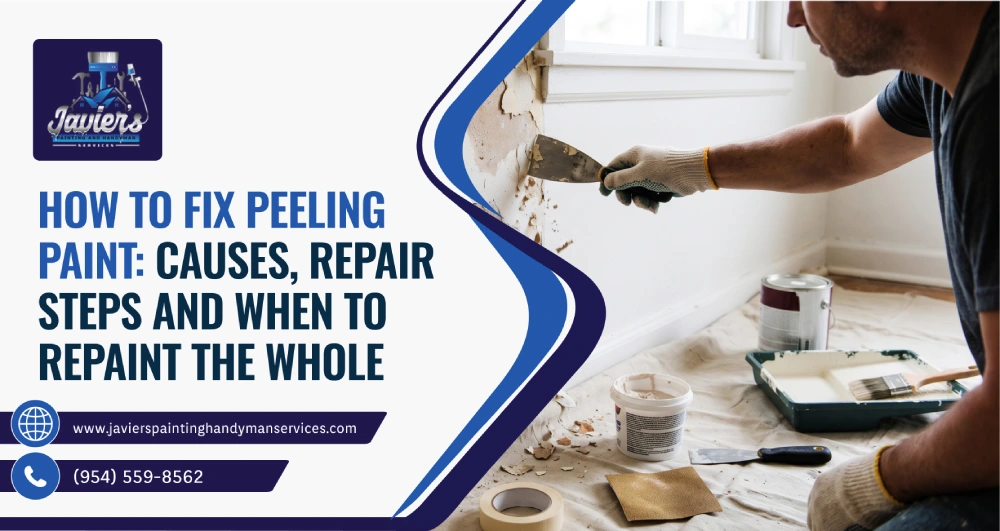
Key Takeaways
- Identify the cause before repairing peeling paint.
- Moisture can weaken paint adhesion.
- Remove loose paint before repainting.
- Sand edges for a smooth finish.
- Apply primer to exposed surfaces.
- Fix leaks before repainting damaged areas.
- Use proper paint for each surface.
- Choose spot repairs or full repainting based on damage.
Peeling is usually caused by lost adhesion between the paint and the surface, not by the paint itself. Paint will often start to come off in small pieces around areas such as windows, doors and damp walls. If the cause is not addressed more paint may start to come off.If you are looking to fix peeling paint it is important to identify why it has occurred. Paint can peel due to moisture, poor surface preparation, using the wrong primer and using the wrong paint. Simply scraping off the loose paint and repainting will not fix the issue if the cause is not addressed.
This guide will show you how to identify the cause, fix the peeling paint and identify whether it is best to do a spot repair or repaint. This guide covers both internal and external surfaces and gives practical advice for homeowners living in South Florida where there is a lot of humidity and changing weather.
Bubbling or blistering paint is a different problem with different causes, so we cover it in a separate guide.
How to Tell If Your Existing Paint Is Still Usable
Before beginning any repairs, make sure that the surrounding paint is firmly fixed. Remove any paint that is coming away or loose. Usually any sound paint can be left.
Look for any curling, cracking and flaking paint. Try lifting any loose edges with a putty knife. Be careful not to force the knife under any firmly fixed paint.
Another simple test you can do to see if there are any weak areas is to press painter’s tape over the area and surrounding paint. Then pull the tape off. If paint comes off easily then there may be an adhesion issue. This is a basic test.
If you are looking at external walls, run your hand over the surface. If you feel any chalky powder then the paint may have deteriorated due to the sun. You may need to clean the surface and apply a suitable primer.
Also look for any damp, staining, cracks and damaged caulk. This can help determine why the paint is coming away.
Why Is My Paint Peeling? Common Causes to Check
Paint peels due to it being unable to stick to your surface. It can be caused by a variety of issues, so it is important to find out what is causing the issue.
Moisture: There could be a leak in your plumbing, roof or there could be a crack in your exterior wall. This can cause water to seep through to your painted surface. This will cause the paint to lose adhesion.
Humidity: South Florida can have high humidity which can cause surfaces to not dry as well. Bathrooms, laundry rooms and other areas with poor ventilation can be more prone to issues.
Poor surface prep: If the surface you are painting is dirty, greasy, dusty or has loose paint then it can cause the paint to not stick well. Ensure your surface is clean and prepped properly.
No primer: Some surfaces will require a suitable primer to help the new paint stick. If you are painting over drywall, repairs, stains or certain painted surfaces then you may need to use specific products.
Loose paint: You cannot paint over paint that has lost adhesion. Any loose or flaking areas should be removed.
Wrong products: Some combinations of paint and primer will not work well together. If you are trying to paint over an old oil based finish with a water based product and do not properly prep the surface then you will get poor adhesion. See if the product has any instructions and ensure you follow them to properly prep the existing surface.
Incorrect painting conditions: If you are painting over a damp surface or the temperature and humidity are not within the manufacturers guidelines then this can cause issues.
If you skip this step and repaint over an unresolved cause, the new paint will usually start peeling in the same spot.
Why Is Paint Peeling in the Bathroom?
Bathroom paint can cause peeling in an area with lots of steam from the shower, poor ventilation and water leaks. This can cause the paint to lose adhesion. This can be made worse by using an incorrect product or finish.
Ensure you are not having issues with a weak exhaust fan, blocked vents, leaking plumbing and damaged caulk around your bath or shower. Check for peeling around the ceiling, windows and any area where there is regular splashing.
Ensure you’re using the correct paint. A cheap interior paint may not last well with constant exposure to moisture and cleaning. Use a good quality bathroom paint which is designed for use in moist areas and is easy to clean.
Before painting, scrape off any loose paint and clean. Ensure it is fully dry. Repair any damaged areas and use a suitable primer. If the wall or ceiling is soft, swollen or stained check for any hidden water damage.
How to Repair Peeling Paint on Your Interior Walls
Minor peeling paint can be easily repaired by following the correct preparation methods. As long as the surface is dry, firm and not too damaged you can do this yourself.
Here’s what the process involves:
1. Prepare the area
Move any furniture away from the area. Cover the floor and surrounding items with drop cloths or plastic. Also wear gloves, eye protection and a dust mask or respirator.
If the paint is likely to be old and contain lead do not scrape or sand it off until it has been tested. Old paints may need special treatment.
2. Remove any loose paint
Using a paint scraper or putty knife remove any peeling or loose paint. Be careful not to scratch the surface. Do not scrape any paint that is well attached.
3. Sand the edges
Sand the edges of the old paint using a fine grade sandpaper to help even out the paint. If you are unsure about the old paint do not sand too hard.
4. Clean the surface
Clean the surface to remove any dust, dirt, greasy build up and loose bits. Use a method that suits the surface you are painting. Allow to fully dry. Do not apply the primer or paint to a wet surface.
5. Fill cracks
Fill any small cracks or holes with an appropriate filler. Follow the manufacturers instructions for the filler and allow it to fully dry. Then sand to leave a smooth surface. If the drywall is soft, water-damaged or cracking again, fix that problem first.
6. Use the correct primer
Use a primer that will suit the current finish and surface. You may need to use a primer to cover the drywall, filler, stains and other surfaces. Follow the manufacturer’s specifications.
7. Paint the area
Choose an interior paint that will suit the room and surface. Follow the manufacturer’s instructions to apply the correct amount of coats and drying conditions.
If you prepare the underlayers properly you will have a good surface for the new coating to stick to. If you don’t you may need to peel it off again.
How to Fix Peeling Paint on an Exterior Wall in Florida
Check the walls for any sign of water penetration or any cracks. It should be checked in and around doors, windows, roof ends, and joints. Tap on the wood sections to see if there is any softening or damage. Tap on the masonry sections to see any cracks.
After dealing with the cause, remove the flakes of the paint from the outside using the right tools. If there is any unevenness or raised areas, sand them and brush off any dust, dirt, and chalk. Allow drying according to the recommendations of the paint manufacturer.
Where necessary, apply the right exterior primer to the exposed areas. Apply the appropriate exterior paint.
Keep the weather in mind. Do not paint wet surfaces. Check if the weather conditions are right (rain, temperature, humidity, and other things).
For larger exterior repairs or a complete repaint, learn more about our exterior painting services.
Can You Paint Over Peeling Paint?
No. New paint cannot grip a surface that is already letting go, so it will flake off together with the old paint.
Remove any loose areas and check that the surface is dry, not cracked or damaged. Ensure edges are even and dust has been removed. Any issues should be resolved. Apply an appropriate primer where required.
If there is a large area of paint lifting, don’t apply any new paint. Paint may not be sticking over a large area so should be properly assessed and prepared.
Only apply a new coat if the surface is clean, dry and in good condition.
How to Stop Paint from Peeling Again
Proper surface protection and using the right products for the space or exterior surface will help prevent chipping. Proper preparation will give you a great looking finish.
Ensure any leaks or water ingress is fixed. Ensure bathrooms and other wet areas are well ventilated. Check the area around windows, doors and plumbing for damaged caulk.
Ensure surfaces are clean and any loose coatings removed. Use the correct primer for any bare, repaired, stained or painted areas. Choose the correct paint for the surface.
Take into account the humidity and weather in South Florida. Follow the manufacturers guidelines for surface preparation and application.
The paint itself also matters. Our guide to best paint types for humidity explains what to consider when choosing coatings for humid conditions.
When Is a Small Paint Repair Enough, and When Should You Repaint the Whole Surface?
If only a small area is peeling and the surrounding area is well adhered then you may only need a small repair.
Go for a small paint repair if you have:
- A small area of peeling
- Well adhered surrounding paint
- The wall/external surface is dry and in good condition
- You can match the repair to the existing paint and finish
- Then you may want to do a spot repair.
If there are multiple areas where the coating is failing and the current coating is in poor condition, you may want to repaint the whole area.
Repaint the whole surface if you have:
- Multiple areas of peeling
- Multiple areas of easy to remove existing coating
- Multiple repairs would leave a patchy look
- Existing paint has faded or it is difficult to find a matching color
- The finish is worn or not even over the larger area
If you are repainting external walls then you may want to take into consideration if there is one area or multiple sides of your home that the paint is failing. If there is widespread damage then you may want to do a more thorough preparation and repaint.
Don’t make your decision based on how it looks. If the surface has any damp damage, loose material or a leak then you will want to fix the underlying issue before deciding on how large you want to paint.
If you need help with interior paint repairs, contact Javier’s Painting & Handyman Services, the experienced house painters in Fort Lauderdale. Our team can assess the surface and help determine whether a spot repair or a larger repaint is appropriate. Get a free estimate today!
Frequently Asked Questions
Why is my paint peeling?
Paint peels usually because it has lost adhesion to the surface. This can be due to many factors such as moisture, incorrect surface preparation, incorrect primer, incorrect products being used together and incorrect painting conditions. You need to find out what is causing the problem and fix it.
How do I repair peeling paint on an external wall?
Check for any leaks, cracks and damaged caulk. Remove any loose paint. Sand down any uneven areas. Clean and allow to dry. If required apply a compatible external primer. Repaint with a suitable external coating.
Can I paint over peeling paint?
No. You will need to remove any loose paint and prepare the surface. If you were to paint over peeling paint the new paint could start to peel.
Do I need to use a primer?
It depends on the surface and paint system. If there are any bare areas, repairs, stains or certain materials you may need to use a suitable primer. Check the manufacturer guidelines for the correct product.
Is peeling paint a sign of water damage?
It can be. Peeling that comes with stains, soft drywall or a musty smell often points to a leak or trapped moisture and should be checked before repainting.