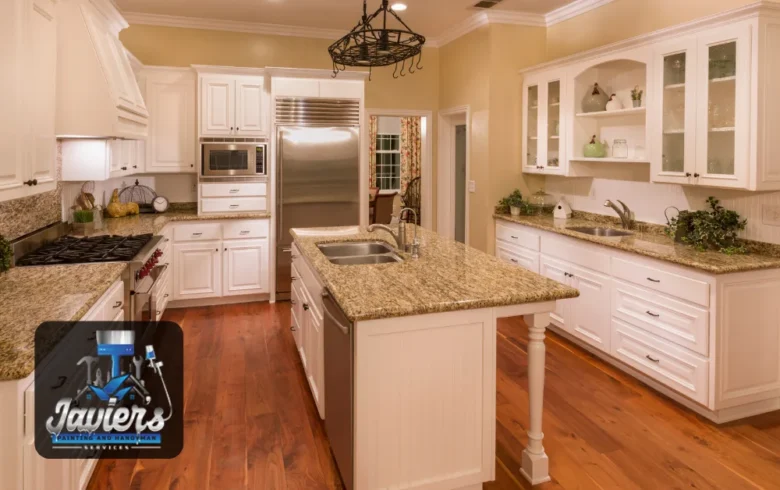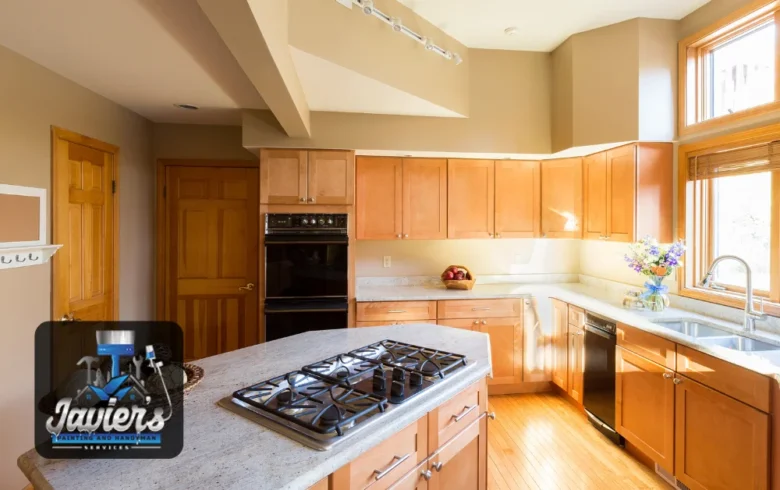

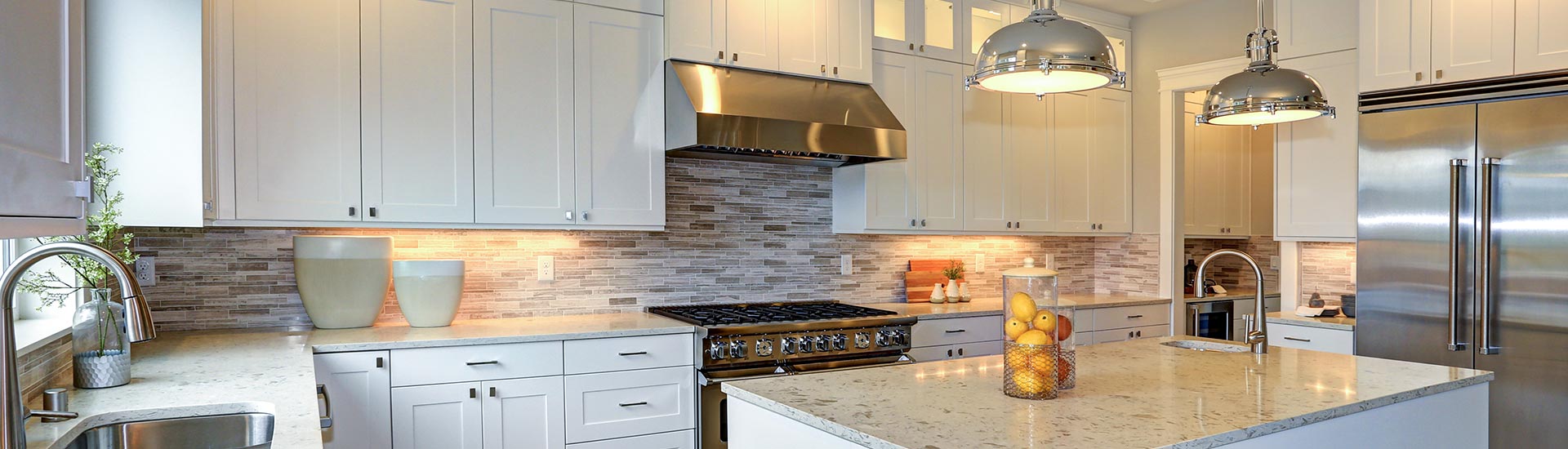
Upgrading your cabinetry is a high-impact investment that completely redefines the heart of your home. Javier’s Painting & Handyman Services executes premium kitchen cabinet remodels across South Florida.
Yet, planning a kitchen cabinet remodeling project requires careful consideration of several factors to ensure a successful outcome that meets your functional and aesthetic needs. These are some essential factors to consider:
Layout and Space Optimization:
Assess the current layout and functionality of your kitchen space. Determine if there are any inefficiencies or areas for improvement.
Consider the flow of movement within the kitchen and how you can optimize cabinet placement to enhance usability and accessibility.
Evaluate whether you need to reconfigure the layout to accommodate new appliances, additional storage, or improve workspace efficiency.
Storage Requirements:
Take inventory of your kitchen items and determine the amount of storage space needed for cookware, utensils, food items, and appliances.
Plan for specialized storage solutions such as pull-out shelves, drawer organizers, and corner cabinets to maximize space utilization and organization.
Consider incorporating multi-functional cabinets or accessories like lazy Susans, pantry pull-outs, and vertical dividers to optimize storage capacity.
Style and Design:
Choose a cabinet style and finish that complements the overall aesthetic of your kitchen and reflects your personal taste.
Consider factors such as cabinet door style (e.g., shaker, flat-panel, inset), hardware finishes, and decorative accents to achieve the desired look.
Explore options for customization, such as glass inserts, crown molding, or decorative legs to add character and sophistication to your cabinets.
Material Selection:
Select high-quality materials that are durable and suited to the demands of the kitchen environment, such as solid wood, plywood, or medium-density fiberboard (MDF).
Evaluate the pros and cons of different finishes, including painted, stained, or laminate surfaces, based on your preferences and maintenance requirements.
Consider factors such as ease of cleaning, resistance to moisture and stains, and long-term durability when choosing cabinet materials.
Budget and Timeline:
Establish a realistic budget for your cabinet remodeling project, taking into account material costs, labor expenses, and any additional fees for installation or professional services.
Create a detailed timeline outlining key milestones and deadlines for completing the project, considering factors such as lead times for ordering materials and scheduling contractors.
Be prepared to prioritize essential upgrades within your budget constraints and consider potential cost-saving measures such as refacing existing cabinets or DIY installation for certain tasks.
By carefully considering these factors, you can plan a kitchen cabinet remodeling project that enhances the functionality, aesthetics, and value of your home.
Kindly call us without hesitation.
FAQs
Hanging cabinets requires exact precision, heavy lifting, and the ability to find hidden wall studs and navigate uneven drywall. A slight miscalculation by an amateur will result in crooked cabinets, uneven doors, and potentially dangerous structural failures.
Solid wood and high-grade plywood are the industry standards for durability. Unlike cheap particle board, which absorbs moisture and swells easily, plywood holds screws tightly and withstands the heavy humidity and heat generated in a kitchen environment.
Absolutely. Stationary cabinet shelves create dark dead zones where food gets lost and expires. Custom pull-out shelves bring the contents out to you, maximizing every inch of storage and keeping your kitchen highly organized.